
Shipping from Mongolia to Uzbekistan
Cargo from Mongolia to Uzbekistan by rail and road. Rail: 15-20 days, road: 10-14 days.
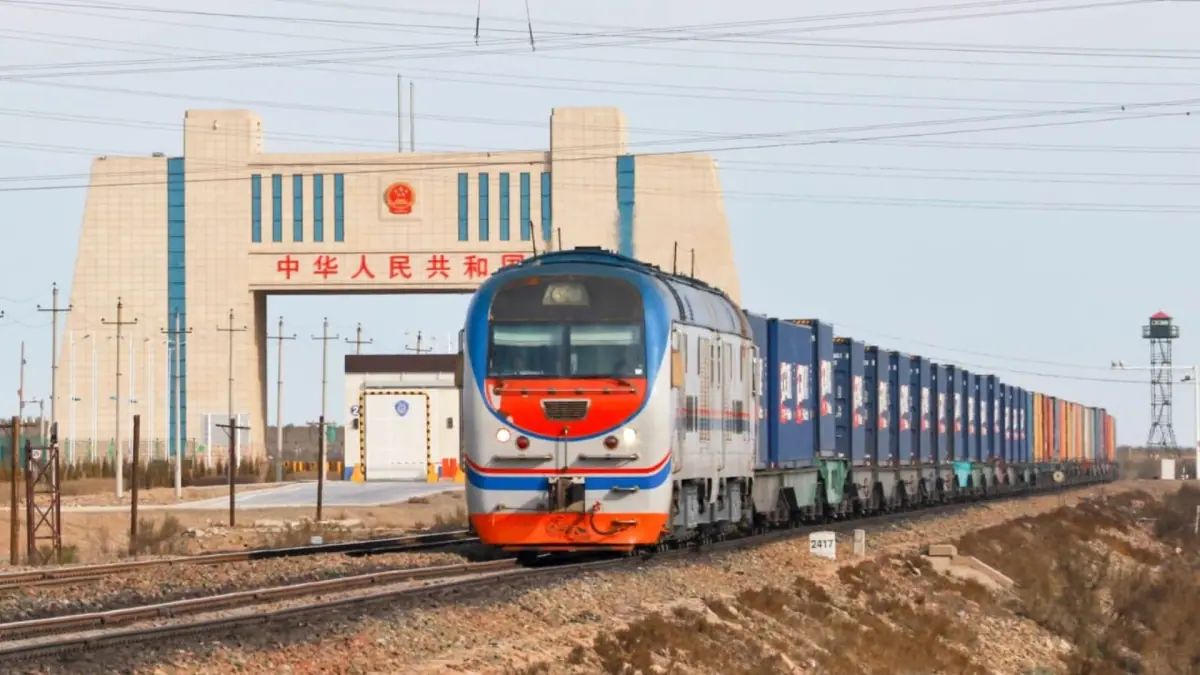
How long does shipping from Mongolia to Uzbekistan take?
Transit time, fit and indicative price for each mode.
| Mode | Transit | Best for | Indicative price |
|---|---|---|---|
| Rail | 15–20 days | Containerised industrial equipment, large volumes | Confirmed by a manager → |
| Road | 10–14 days | E-commerce, manufacturing goods, LCL consolidation | Confirmed by a manager → |
Prices are indicative and confirmed by a manager — they depend on the cargo, the season and the loading city.
The route, border by border
Ulaanbaatar → Rail or road leg → Tashkent. Our own agents hold each handover, and clearance in Tashkent is done in-house.
Shipping from Mongolia, in practice
Learn more
Mongolia and Uzbekistan, both landlocked nations with shared historical ties along the ancient Silk Road, have experienced growing bilateral trade in recent years. Mongolia's exports to Uzbekistan primarily consist of mining equipment, cashmere, animal products, and mineral concentrates. The absence of a direct border between the two countries means all cargo must transit through third countries — predominantly China, Kazakhstan, and Kyrgyzstan — making route selection and customs coordination critical success factors.
Rail freight is the most reliable and high-volume option for Mongolia-to-Uzbekistan trade. Cargo departs from Ulaanbaatar and travels south to the Erlian/Erenhot border crossing into China. From there, it joins the Chinese rail network, passing through key hubs such as Jining, Lanzhou, and Ürümqi before crossing into Kazakhstan at the Alataw Pass (Dostyk/Alashankou). The containers then travel across Kazakhstan to Uzbekistan via the Saryagash or Keles border crossings. Total transit time ranges from 15 to 20 days, making rail a competitive option for bulk commodities and heavy equipment.
Road transport offers a faster but more logistically complex alternative, with transit times of 10 to 14 days. Trucks carrying cargo from Ulaanbaatar head west through Mongolia to the Chinese border, then travel through the Xinjiang region of China. From Xinjiang, trucks cross into Kyrgyzstan via the Torugart or Irkeshtam mountain passes, both situated at altitudes exceeding 3,000 meters. The final leg traverses Kyrgyzstan and crosses into Uzbekistan at the Dustlik/Guliston or Uchkurgan border points. Road transport is particularly suited for perishable animal products and time-sensitive textile shipments.
The Mongolia-China rail corridor, a key component of the China-Mongolia-Russia Economic Corridor, has significantly improved connectivity for Mongolian exports. The rail route through China benefits from well-maintained infrastructure and standardized gauge, though the break-of-gauge at the China-Kazakhstan border (standard to Russian broad gauge) requires container transshipment. Many logistics providers offer through-transport services that manage this transition seamlessly, including customs clearance at multiple border points.
Cashmere and other high-value animal products from Mongolia's vast steppes are increasingly in demand in Uzbekistan's textile and fashion markets. These goods require careful handling and temperature-controlled environments, particularly during the hot Central Asian summers. Specialized logistics providers offer refrigerated trucking and monitored warehousing solutions along the road corridor. Mining equipment, on the other hand, requires heavy-lift capacity and oversized cargo permits, best handled via the rail network's flatcar and open-wagon services.
Trade volumes between Mongolia and Uzbekistan are projected to grow as both countries deepen their engagement within regional frameworks such as the Shanghai Cooperation Organisation (SCO) and the Economic Cooperation Organization (ECO). Improved customs harmonization and digital documentation systems at key border crossings are reducing transit delays. For logistics planners the Mongolia-Uzbekistan corridor represents a classic Central Asian trade route — rich in opportunity but demanding meticulous preparation and reliable ground partners.
Questions importers ask
Marked up as FAQPage so AI engines and Google can quote the answers directly.
How long does shipping from Mongolia to Uzbekistan take?
Rail: 15-20 days, road: 10-14 days.
Which transport modes are available from Mongolia?
rail · road are available on this corridor. A manager compares them on your actual weight and volume and recommends the cheaper one.
Who clears customs in Tashkent?
Our own brokerage, under licence 2025-789-BR. We work at the Sergeli and Aviayuklar posts and clearance usually takes under 24 hours. The cargo is never handed to a third-party broker.
What does the quoted price include?
Consolidation, line haul, the border handovers, customs clearance in Tashkent and delivery to your address in Uzbekistan. Every shipment is insured. A manager confirms the final figure before booking.
Quote for Mongolia → Tashkent
Origin is prefilled. Four fields, then a manager replies within an hour on Telegram or by phone.